
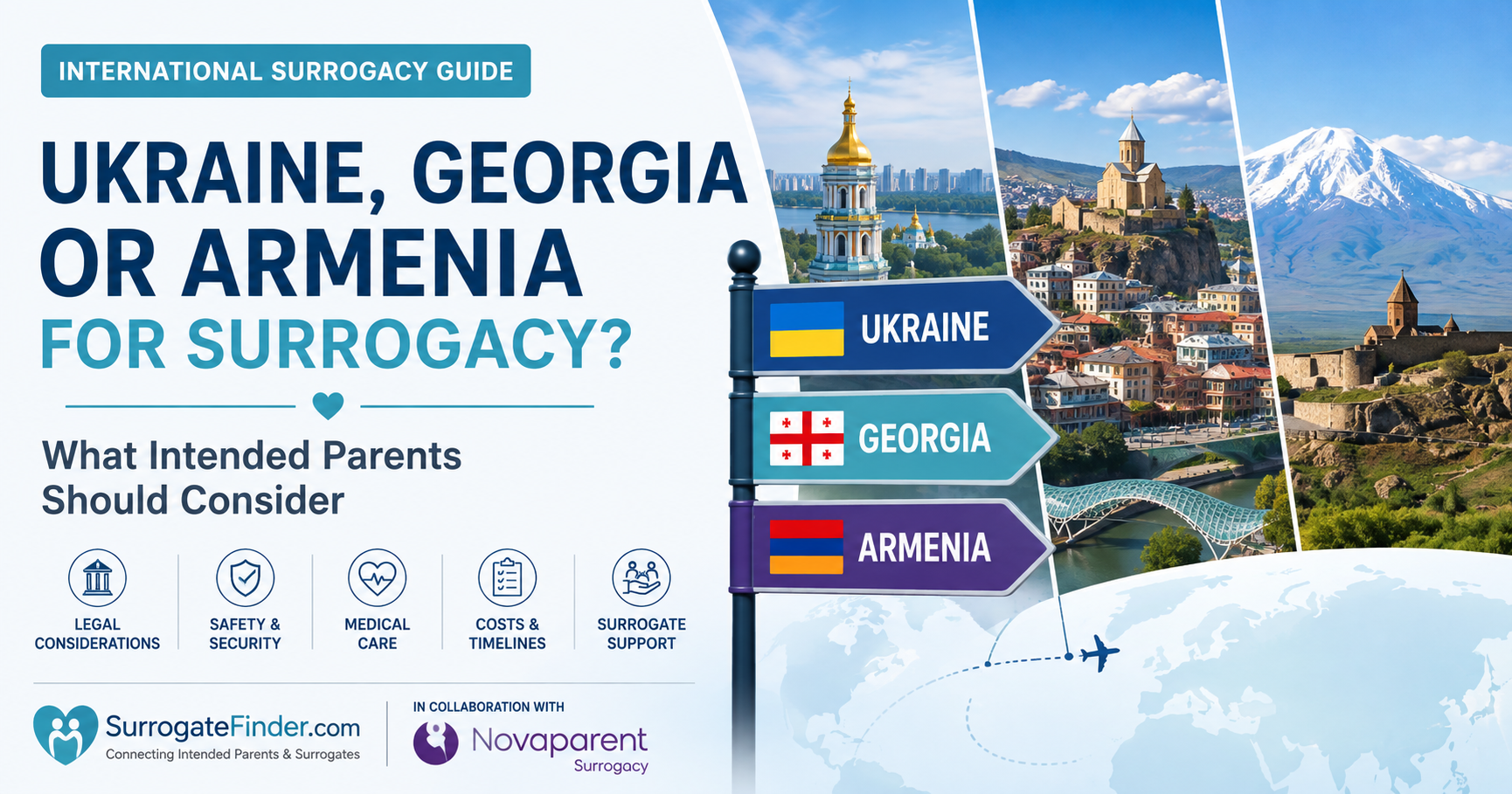
For intended parents considering international surrogacy, choosing a country can feel like choosing between three versions of the same journey. In reality, the country affects almost every stage: who is eligible, how legal parentage is recorded, where treatment takes place, how a surrogate is matched and supported, how much travel is required, and how the child can return home after birth.
Ukraine, Georgia and Armenia are all used for gestational surrogacy programs, but they are not interchangeable. Each has a different legal and practical context, and the right choice depends on the intended parents' nationality, medical circumstances, risk tolerance and priorities.
There is no universally “best” destination. A suitable option is one in which the medical, legal, ethical and practical arrangements work together for the particular family, the surrogate and the child.
Begin With Eligibility, Not Price
Before comparing clinics or packages, intended parents should establish whether they are currently eligible in each destination and whether their home country will recognise the route they plan to use.
Eligibility may depend on factors such as marital status, medical evidence, age, the source of the embryos and whether at least one intended parent has a genetic connection to the child. Agency policies may be narrower than the law itself, and national rules can change.
Novaparent currently focuses its programs on married heterosexual couples with a documented medical need for surrogacy. However, every family should have its individual eligibility checked by current legal and medical professionals before signing an agreement or moving embryos.
Compare the Legal Route in Both Countries
International surrogacy always involves at least two legal systems: the law where the child is born and the law of the intended parents' home country. A birth certificate issued abroad may be important, but it does not necessarily settle legal parenthood, nationality or immigration status at home.
For example, UK guidance explains that an overseas birth certificate or court decision does not automatically determine legal parenthood under UK law. British intended parents may still need a parental order or another legal route after returning home, and obtaining travel documents for a child born abroad can take time.
Before choosing a destination, intended parents should obtain independent advice that answers questions such as:
- Who will be treated as the legal parents at birth in the destination country?
- What documents are issued after birth and how long do they usually take?
- What genetic, marital or medical requirements apply?
- What consent is required from the surrogate and, where relevant, her spouse?
- How will the child obtain citizenship, a passport or entry clearance?
- What legal process is required after the family returns home?
This advice should come from professionals who understand both jurisdictions. The agency's lawyer can explain the local process, but intended parents should also consider independent advice in their home country.
Consider Safety, Travel and Contingency Planning
Travel and safety are among the clearest differences between the three destinations.
Ukraine
Ukraine has an established gestational-surrogacy framework and experienced fertility providers, but it remains affected by active conflict. Current travel advice warns against travel to significant parts of the country, and security conditions can change quickly.
Any Ukraine program should therefore include a realistic, written contingency plan. Intended parents should ask where the surrogate lives, where treatment and birth are expected to take place, what happens if the security situation changes, how emergency relocation would work, and whether their insurance remains valid.
Georgia
Georgia does not have Ukraine's active-war factor, although there are regions where official travel warnings apply. Programs based in Tbilisi may therefore feel more straightforward from a travel perspective, but intended parents should still monitor political developments, insurance requirements and entry rules.
Armenia
Armenia is another regional option centred mainly on Yerevan. Travel warnings may apply to certain border areas. Intended parents should understand where every medical, legal and surrogate-related stage will take place and whether any cross-border travel is involved.
In all three destinations, safety planning should cover more than flights. It should include accommodation, hospital access, emergency funds, insurance, document delays, communication during disruptions and the possibility of a longer-than-expected stay after birth.
Examine the Medical Pathway, Not Just the Clinic Name
A surrogacy program may involve embryo creation, donor eggs, genetic testing, embryo transport, surrogate screening, embryo transfer, prenatal care and delivery. Intended parents should understand which clinic is responsible for each stage and how information moves between clinics, the agency and the surrogate.
Useful questions include:
- Which clinic and hospital will be used, and who are the treating specialists?
- How are success rates presented for patients of a similar age and medical history?
- What tests are included before an embryo transfer?
- How are embryos stored or transported, and who carries responsibility during transport?
- What happens after a failed transfer or cancelled cycle?
- What level of neonatal and emergency care is available at the planned birth hospital?
- Who provides translation and access to medical records?
No clinic or agency can guarantee pregnancy or a healthy birth. Clear information about limitations, unsuccessful cycles and additional treatment is more valuable than headline success claims.
Look Closely at Surrogate Screening and Support
The quality of a program should also be judged by how it treats and supports surrogate mothers. Intended parents should understand the full screening process, not simply be told that a surrogate is “approved.”
Screening may include previous pregnancy and birth history, medical assessment, psychological evaluation, identity and background checks, home circumstances and the availability of family support. The fertility clinic should give its own medical clearance before treatment.
Support should continue throughout the pregnancy. Ask who communicates with the surrogate, who accompanies her to appointments, how expenses are paid, what happens if she needs bed rest or emergency treatment, and whether she receives independent legal advice in a language she fully understands.
Where a surrogate lives in a different country from the clinic or intended parents, the arrangement may require additional travel, immigration, insurance and legal planning. Intended parents should ask which country's agreement applies and who is responsible at every border and handover point.
Compare the Real Timeline
Advertised timelines can be helpful, but they are only estimates. A complete journey can include document collection, legal eligibility checks, embryo creation or transport, surrogate matching, medical clearance, one or more embryo transfers, pregnancy and post-birth paperwork.
The fastest legal process on paper is not always the fastest route home. A destination may issue local documents quickly, but the child's passport, citizenship or entry clearance may take longer under the intended parents' home-country rules.
Ask for realistic ranges rather than a single best-case figure, and ask which stages most commonly cause delays.
Compare What the Price Actually Includes
Two programs with similar headline prices may cover very different services. Intended parents should request a written schedule showing what is included, what is optional and what can trigger additional charges.
The budget should consider:
- Agency and coordination fees
- Surrogate compensation, expenses and insurance
- IVF, donor eggs, medication and embryo testing
- Additional embryo-transfer attempts
- Pregnancy complications, hospital care and neonatal care
- Local and home-country legal fees
- Travel, accommodation, translation and document certification
- A longer stay after birth while travel documents are processed
- Currency movements, cancellation terms and refund rules
The most useful quotation is transparent about uncertain costs and explains who pays if the journey changes.
How the Three Destinations Differ in Practice
The following is a practical way to frame the comparison. It is not legal advice, and every point should be reconfirmed immediately before a family commits to a program.
Ukraine may suit families who prioritise an established framework
Ukraine may appeal to intended parents who value its long experience with gestational surrogacy and a structured local parentage process. The decisive issue is whether the family is comfortable with the current security environment and whether the provider has credible, tested contingency arrangements.
Georgia may suit families who prioritise travel simplicity and legal history
Georgia has a long-standing statutory basis for assisted reproduction and surrogacy. Tbilisi can be easier to reach than Ukraine during the war. However, proposals to change access for foreign intended parents have been discussed in recent years, so current eligibility should be confirmed in writing immediately before contracts are signed or embryos are transferred.
Armenia may suit families considering an emerging regional alternative
Armenia offers an alternative medical and legal route centred on Yerevan. Intended parents should ask detailed questions about current eligibility, the nationality and residence of the proposed surrogate, whether any cross-border arrangements are involved, and how those arrangements affect contracts, medical care and post-birth documents.
Questions to Ask Before Choosing
- What is our legal eligibility today, and who has confirmed it?
- What can change between signing and embryo transfer?
- Where will the surrogate live, receive care and give birth?
- What documents will be issued after birth?
- What is the expected route for our child to travel home?
- What are the most realistic safety and delay scenarios?
- How is the surrogate independently advised and supported?
- What costs are not included in the quoted package?
- Who is personally accountable if a medical, legal or travel problem arises?
- Can we speak with families who have recently completed the same route?
Getting Country-Specific Guidance
Novaparent Surrogacy supports married heterosexual couples through programs in Ukraine, Georgia and Armenia. Its work includes coordination across the legal, medical, matching and practical stages of an international surrogacy journey. Intended parents can use an initial consultation to compare the destinations, but should also obtain independent legal advice relevant to their nationality and circumstances.
A responsible adviser should be willing to explain why a particular destination may not be suitable, identify unresolved risks and give intended parents time to obtain independent advice before making a commitment.
Making the Final Decision
The choice between Ukraine, Georgia and Armenia should not be made from a price table alone. Intended parents need a route that remains workable from the first medical step through the child's safe return home.
Ukraine may offer experience and a familiar legal structure but carries significant wartime risk. Georgia may offer easier travel and a long legal history but requires close monitoring of policy developments. Armenia may offer a growing alternative but can involve different surrogate and cross-border considerations.
The best decision is the one made after current legal checks, careful medical review, transparent cost planning, meaningful attention to surrogate welfare and a realistic assessment of travel and risk.
Expert collaboration: This article was produced in collaboration with Novaparent Surrogacy. It provides general information only and is not medical, legal, immigration or travel advice.