
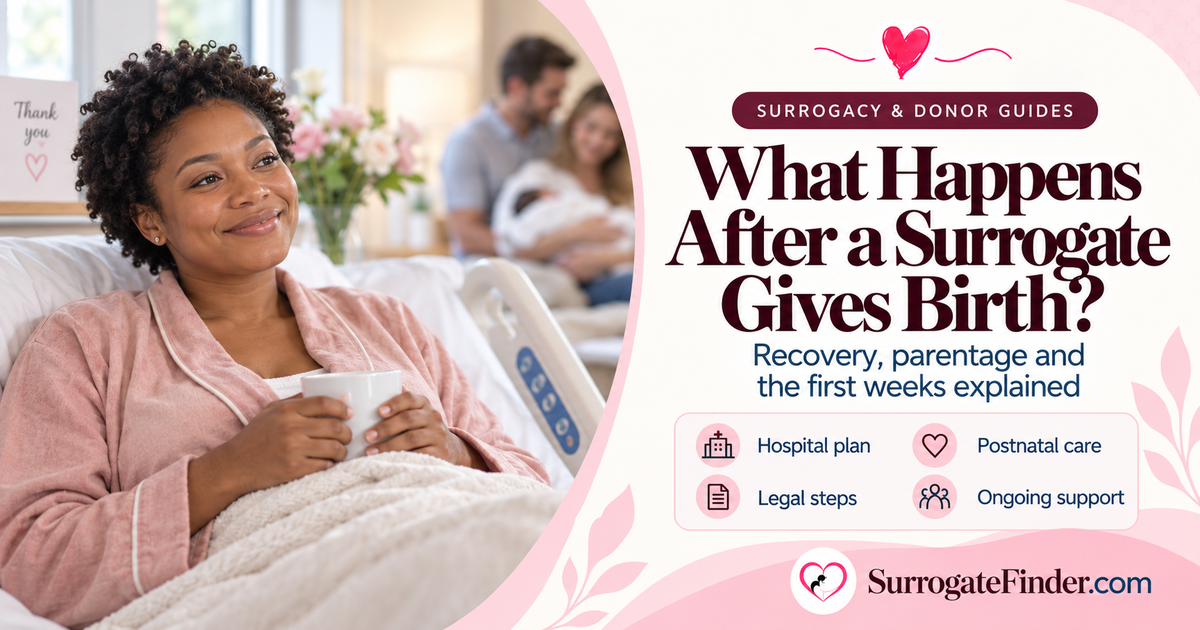
After a surrogate gives birth, two important transitions happen at once. The surrogate begins her physical and emotional recovery from pregnancy, while the intended parents usually begin caring for their baby under the birth plan and legal arrangements prepared before delivery.
The exact process depends on the country or state, hospital policy, type of surrogacy, medical circumstances and the parties’ agreement. A planned delivery may follow the written birth plan closely, while an emergency C-section, premature birth or neonatal admission may require everyone to adapt.
The surrogate remains the patient and retains the right to make decisions about her own medical care. Parentage, discharge and responsibility for the baby must be handled according to local law rather than assumptions or an informal promise.
The short answer
The baby is assessed after delivery and will commonly be placed with the intended parents when it is medically appropriate and permitted by the hospital and legal arrangements. The surrogate receives the same postnatal monitoring and follow-up needed after any birth.
Before anyone leaves hospital, staff may verify identity, review discharge arrangements and follow any pre-birth or post-birth parentage procedure. Expenses, insurance claims and agreed compensation may continue to be administered after delivery.
What happens immediately after delivery?
The clinical priority is the health of the person who has given birth and the newborn. Staff check the surrogate for bleeding, blood pressure, pain and other complications. The baby receives routine newborn assessment and any treatment that is needed.
If everyone is well, the birth plan may describe who is present, who first holds the baby, whether the intended parents cut the cord and whether photographs are taken. These preferences remain subject to consent, medical safety and hospital rules.
Who holds the baby first?
There is no universal rule. Some surrogates want the intended parents to have the first skin-to-skin contact. Others wish to hold the baby first or share a quiet moment together.
The best approach is to discuss this well before labour and record preferences without treating them as guarantees. The surrogate can change her mind about her own contact and privacy, and clinical circumstances can change what is possible.
Do the intended parents care for the baby?
In many planned arrangements, the intended parents begin day-to-day care soon after birth. They may feed, dress, comfort and stay with the baby, sometimes in a separate hospital room.
Hospital staff still need clarity about who can consent to newborn care. The answer depends on legal parentage and local policy. The lawyers and hospital social-work or surrogacy team should resolve this before the expected delivery date.
What if the baby needs neonatal care?
A premature or unwell baby may be admitted to a neonatal unit. Access, consent and updates will follow hospital policy and the applicable legal arrangements.
The surrogate may be recovering elsewhere in the hospital while the intended parents spend time with the baby. The parties should decide how they will communicate and support one another without expecting the surrogate to manage updates while recovering.
The surrogate’s hospital recovery
Recovery depends on the birth. After a vaginal delivery, monitoring may include bleeding, uterine contraction, bladder function, pain and any stitches. After a C-section, recovery also involves wound care, mobility, pain relief and monitoring after surgery.
The surrogate should receive information directly from her clinical team and have private opportunities to ask questions. Her discharge should be based on her health, not on whether the baby is ready to leave.
How long does the surrogate stay in hospital?
Length of stay varies with the type of delivery, local practice and whether complications occur. An uncomplicated vaginal delivery may involve a shorter stay than a caesarean birth.
A baby and surrogate can have different discharge dates. Travel and accommodation plans should allow for uncertainty rather than assuming everyone will leave together.
Who leaves hospital with the baby?
The intended parents commonly leave with the baby when they are legally authorised and the baby is medically ready. However, the hospital must follow local law, court documents and safeguarding procedures.
In some jurisdictions, intended parents can obtain a pre-birth order. Elsewhere, parentage is transferred or confirmed after birth. International arrangements can require additional documents before the baby can travel.
How is legal parentage handled?
Parentage law differs significantly between countries and between states. The person recognised as a legal parent at birth may not be the same everywhere, even when embryos were created using the intended parents’ genetic material.
Each side should receive independent legal advice before treatment. Lawyers may prepare court applications, declarations, consent documents or a post-birth order. A surrogacy agreement alone may not establish parentage.
For an overview of different arrangements, read Traditional Surrogacy vs Gestational Surrogacy.
What appears on the birth certificate?
The names first recorded and the procedure for amending or issuing a birth certificate depend on local law. A hospital cannot simply choose the intended parents because that is what everyone prefers.
The parties should ask their lawyers what documents will be needed, who files them and how long the process can take. International intended parents should also obtain immigration and nationality advice.
What happens to the surrogacy agreement?
Birth does not necessarily end every obligation. The agreement may address postnatal expenses, insurance, medical records, breast milk, photographs, privacy, contact and cooperation with parentage proceedings.
Some provisions may not be legally enforceable in a particular location. Each party should keep a copy and contact their own lawyer if circumstances differ from the plan.
Are final payments made after birth?
In compensated arrangements, the schedule may include payments or reimbursements after delivery. There can also be outstanding travel costs, childcare, lost wages, medical bills or additional amounts connected with a C-section or multiple birth.
Payments should be administered through the agreed lawful process, often an escrow service or programme, rather than negotiated at the bedside. Learn more in How Much Do Surrogate Mothers Get Paid?.
What happens with medical bills and insurance?
Claims and bills may continue for months after delivery. The agreement should explain who manages pregnancy-related deductibles, uncovered treatment and postnatal care.
The surrogate should not ignore an invoice because another party is expected to pay it. She should send it promptly through the agreed channel and retain records. Coverage varies, and neither matching nor a private agreement guarantees that an insurer will pay.
Does the surrogate breastfeed the baby?
Usually this is a personal choice rather than an automatic expectation. A surrogate may decide not to provide milk, may express colostrum briefly or may pump for an agreed period.
Pumping requires time, equipment, storage, transport and physical recovery. Medication and milk-safety questions should be discussed with qualified clinicians. Any arrangement should cover supplies and expenses and allow the surrogate to stop if it affects her health.
What happens if the surrogate does not pump?
Milk production can begin whether or not someone plans to breastfeed. The surrogate’s maternity team can explain comfort measures and how lactation normally settles.
Severe breast pain, redness, fever or flu-like symptoms need medical advice because they may indicate mastitis or another problem. She should not feel pressured to pump simply because milk is available.
Physical recovery during the first weeks
Postpartum recovery can involve bleeding, cramping, breast changes, fatigue, pelvic discomfort and healing from tears or surgery. The surrogate still needs rest, nutrition, help at home and appropriate follow-up even though there is no newborn in her household.
Recovery may take longer after a C-section, haemorrhage, high blood pressure, infection or complicated delivery. Previous eligibility does not remove the need for postnatal care.
Postpartum warning signs
The maternity team should provide personalised instructions about when to seek urgent help. Warning signs can include very heavy bleeding, chest pain, breathing difficulty, severe headache, fainting, seizures, fever, a painful or swollen leg, worsening abdominal pain or concerning wound symptoms.
Thoughts of self-harm, extreme confusion or severe emotional distress also need urgent professional support. Intended parents and agencies should know who to contact but should not try to diagnose the surrogate themselves.
Emotional recovery after surrogacy
A surrogate may feel proud, relieved, happy, tearful, tired or emotionally unsettled. Hormonal changes, physical recovery, public attention and a sudden change in routine can all affect the early weeks.
Feeling emotional does not automatically mean she regrets the journey, and feeling positive does not mean she needs no support. Planned counselling and contact with trusted people should remain available after delivery.
Can surrogates experience postpartum depression?
Yes. A surrogate has experienced pregnancy and birth and can develop postpartum depression, anxiety, post-traumatic symptoms or another perinatal mental-health problem.
Persistent low mood, panic, inability to function, frightening thoughts or a marked change in behaviour should be assessed promptly. Support should come from qualified healthcare professionals rather than relying only on the intended parents or online groups.
Do surrogates feel attached to the baby?
People describe attachment differently. Many gestational surrogates understand the baby as belonging to the intended parents throughout the journey while still caring deeply about the pregnancy and family.
Warm feelings, sadness at the end of an intense experience and pride can coexist. Psychological preparation helps everyone discuss these feelings without using stereotypes or assuming that one response is normal for every surrogate.
Does the surrogate continue seeing the intended parents?
Some relationships remain close through messages, photographs, birthdays or visits. Others become occasional, and some end after the practical post-birth period.
Expectations should be discussed before matching and revisited during pregnancy. Read Questions to Ask Before Becoming a Surrogate and How Intended Parents and Surrogate Mothers Start a Conversation.
Privacy and sharing birth news
Everyone should agree who may announce the birth and which photographs, names or medical details can be posted. The surrogate’s health information remains private, while the intended parents should control personal information about their child.
Consent to a photograph during pregnancy is not permanent permission to publish it after birth. Ask again before posting or tagging anyone.
Postnatal appointments
The surrogate should attend recommended checks with her maternity, primary-care or specialist team. These may review healing, bleeding, blood pressure, contraception, pelvic health, emotional wellbeing and recovery from complications.
If she later considers another journey, clinics will assess the delivery records and recovery again. See How Many Times Can You Be a Surrogate?.
When is the surrogacy journey considered finished?
There is no single finishing date. The baby may leave hospital within days, while parentage paperwork, invoices, pumping, counselling and medical recovery continue for weeks or months.
A thoughtful closing conversation can confirm outstanding tasks and future contact. It should not pressure either side to promise a relationship they cannot maintain.
Planning before the birth
- Prepare a flexible hospital birth plan.
- Confirm separate legal representation and parentage steps.
- Discuss newborn care, photographs and visitors.
- Agree preferences about colostrum or pumping.
- Confirm expenses, escrow and insurance contacts.
- Plan transport, childcare and help for the surrogate.
- Arrange postnatal medical and emotional support.
- Discuss communication after everyone returns home.
Preparation is one stage of the wider timeline explained in How Long Does the Surrogacy Process Take?.
Frequently asked questions
Does a surrogate go home without the baby?
In most gestational-surrogacy arrangements, the intended parents care for and leave with the baby when legally and medically permitted. The surrogate has her own discharge and recovery plan.
Can the surrogate hold the baby after birth?
She can usually hold the baby if she wants to, the intended parents agree where required and the clinical situation permits. Preferences should be discussed before delivery.
Who makes medical decisions for the newborn?
This depends on who has legal authority under local law and any court order. The hospital and lawyers should establish the process before birth.
Does the surrogate have to provide breast milk?
No. Pumping or providing colostrum should be an informed, voluntary decision with medical advice and clear arrangements for costs and transport.
Who pays the surrogate’s postnatal medical costs?
The agreement, insurance terms and local law determine responsibility. Bills and claims should be handled through the agreed process.
How long does recovery take?
Recovery varies by person, delivery and complications. Medical follow-up should guide activity and treatment rather than a fixed online timetable.
Can a surrogate have postpartum depression?
Yes. Pregnancy and birth can be followed by depression, anxiety or trauma symptoms, so access to professional postnatal mental-health support is important.
Do surrogates stay in contact with the family?
Some do and some do not. The parties should discuss realistic expectations before matching and communicate openly if circumstances change.
The bottom line
After delivery, the intended parents usually begin caring for the baby while the surrogate receives postnatal care and starts recovering. Legal parentage, hospital access, discharge, money, milk and ongoing contact must follow the applicable rules and the parties’ carefully prepared plans.
The surrogate’s health does not become secondary once the baby is born. Good journeys include proper medical follow-up, emotional support, privacy and respectful communication for everyone involved. SurrogateFinder is a matching platform, not a medical provider, legal adviser or surrogacy agency.