
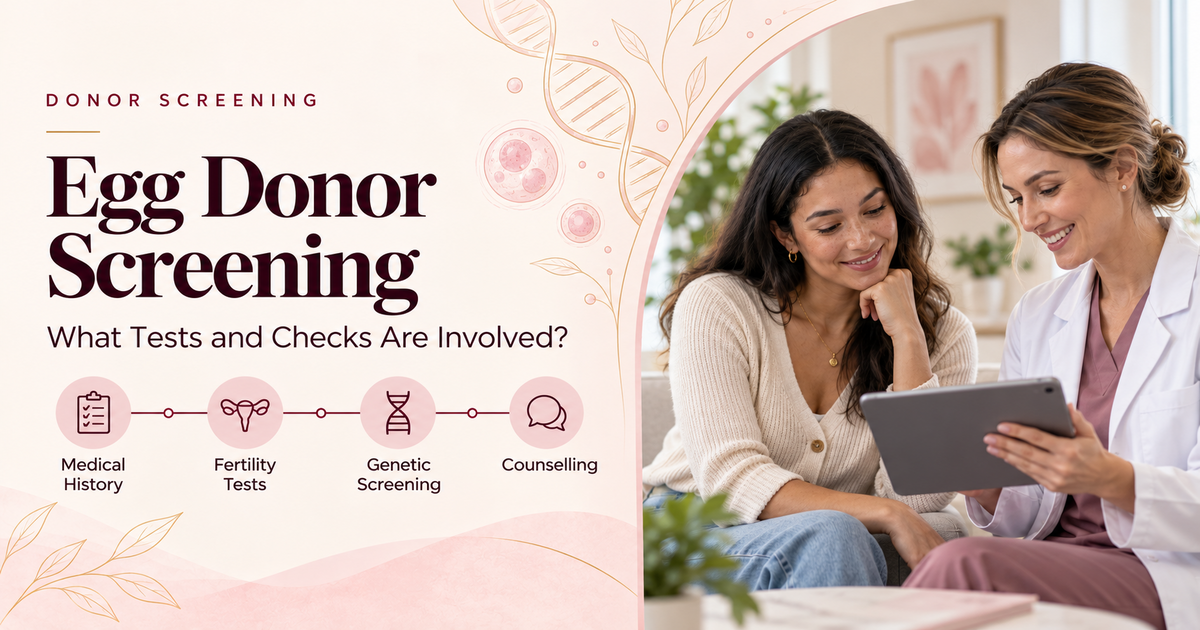
Egg donor screening and eligibility requirements form a structured process used by fertility clinics and donor programmes to assess a potential donor’s health, fertility, medical and family history, risk of transmissible infection, genetic background and emotional readiness. The exact tests vary by country, clinic and whether the donation is directed or non-directed, but the goal is the same: to protect the donor, the recipient and any child who may be born from the donation.
The Short Answer
Most potential egg donors complete several stages rather than one single test. Screening commonly includes:
- An application and detailed personal, reproductive and family medical history.
- A consultation and physical examination by a qualified healthcare professional.
- Blood and urine tests for relevant infectious diseases.
- Assessment of ovarian reserve and response potential, often using blood tests and an ultrasound.
- Genetic carrier screening based on professional guidance, ancestry, family history and clinic policy.
- A psychological assessment or counselling session covering consent, expectations and the long-term implications of donation.
- Checks required by the clinic, regulator or applicable law, which may include identity verification and a review of lifestyle or medication risks.
Being accepted by an online matching service is not the same as being medically approved to donate. Final eligibility must be determined by the fertility clinic and relevant professionals before treatment begins.
Why Egg Donor Screening Matters
Egg donation involves ovarian stimulation, monitoring and an egg retrieval procedure. Screening helps clinicians decide whether treatment is reasonably safe for the potential donor and whether there are identifiable risks that should be discussed or investigated. It also helps reduce the risk of transmitting certain infections or serious inherited conditions. Potential donors should also understand the possible risks and side effects of egg donation before consenting to treatment.
Screening cannot remove every risk or guarantee a particular number or quality of eggs. Some conditions cannot be detected, test results can change over time, and family medical histories are not always complete. A reputable programme should explain both what its screening covers and what it cannot establish.
1 Personal and Medical History
The process normally begins with a detailed questionnaire and an interview. The clinic may ask about current health, previous illnesses, operations, allergies, medicines, vaccinations and any history of hospital treatment. It may also ask about smoking, vaping, alcohol, recreational drugs, recent travel and other factors that could affect treatment or infection risk.
Reproductive history is especially important. Questions may cover menstrual cycles, previous pregnancies, fertility treatment, contraception, pelvic infections, sexually transmitted infections, miscarriage, pregnancy complications and prior egg-donation cycles. Donors should answer accurately, even when a question feels personal, because clinicians use the combined information to assess safety.
2 Family Medical History
Potential donors are usually asked for a multigenerational family medical history where possible. This may cover parents, siblings, children and grandparents, with attention to inherited disorders, congenital conditions, early deaths, neurological or cardiac disease, cancers, learning disabilities and significant mental health conditions.
A condition in the family does not automatically mean someone cannot donate. It may instead lead to a genetics consultation, a more targeted test or a discussion about residual risk. If information is unknown, the donor should say so rather than guess.
3 Physical and Fertility Assessment
A clinician may perform a general physical examination and review the donor’s height, weight, blood pressure and overall health. A gynaecological assessment may also be required. Clinics set their own criteria, so an individual who is accepted by one programme may not meet another programme’s policy.
Fertility assessment commonly includes a transvaginal ultrasound to examine the ovaries and count visible antral follicles. Blood tests may include anti-Müllerian hormone, often called AMH, and sometimes other reproductive hormones. These results help the clinic estimate how the ovaries may respond to stimulation. They do not guarantee the number of eggs retrieved or predict a future child’s health. Our guide explaining whether donating eggs affects future fertility provides more context about ovarian reserve and treatment.
4 Infectious Disease Screening
Egg donors are tested for relevant communicable diseases according to local law and clinic policy. In the United States, donor-eligibility rules for reproductive tissue include screening based on medical records and risk factors, together with required laboratory testing. Depending on the jurisdiction and circumstances, testing may include HIV, hepatitis B, hepatitis C, syphilis, chlamydia and gonorrhoea, with additional tests where indicated.
Timing matters because some tests must be performed within a defined period around egg retrieval. A clinic may repeat tests if treatment is delayed or if circumstances change. A positive or unclear result does not always provide a diagnosis by itself; the clinic should explain confirmatory testing, medical follow-up and what the result means for donation.
5 Genetic Screening
Genetic screening may include testing for specific inherited conditions and a carrier-screening panel. The selection of tests can depend on family history, ancestry, professional recommendations and the recipient’s or sperm provider’s results. Some programmes use expanded carrier screening, but panel size and interpretation vary.
A carrier result is common and does not usually mean the donor is unwell. For many recessive conditions, the main concern is whether the sperm provider carries a disease-causing variant in the same gene. Genetic counselling can help the donor and intended parents understand what was tested, the limitations of the panel and whether further testing is appropriate.
6 Psychological Evaluation and Counselling
Egg donation has medical, emotional, family and long-term implications. A psychological professional or counsellor may explore the donor’s reasons for donating, expectations, support network, ability to follow treatment instructions and understanding of consent. The discussion may also cover the possibility of cycle cancellation, the creation of genetic offspring and future contact or identification.
The growth of consumer DNA databases means anonymity cannot be guaranteed in practice, even where a programme describes a donation as non-identified. Donors should receive clear information about record keeping, what information may be released, applicable laws and the possibility of future contact.
7 Lifestyle and Other Programme Checks
Clinics may review nicotine, alcohol and drug use and may perform toxicology or nicotine testing. They may also examine current medicines and supplements, recent tattoos or piercings, travel, occupational exposures and the donor’s ability to attend monitoring appointments. Requirements differ, so potential donors should ask for the programme’s written criteria before making commitments.
Some programmes also verify identity, education or other profile information. These administrative checks are separate from medical screening and should not be presented as proof that a donor will produce a successful pregnancy.
What Can Prevent or Delay Approval
A clinic may decline or postpone a donation when it identifies a concern about medical safety, infection risk, ovarian response, genetic risk, informed consent or the donor’s ability to complete treatment safely. Examples can include an untreated health condition, a test requiring confirmation, recent exposure to infection, certain medicines or a family history that needs specialist review.
A delay or rejection is not a judgement about the person. Eligibility criteria are designed for a specific medical procedure and can differ between clinics and countries. Anyone with an unexpected result should be offered an explanation and directed to appropriate healthcare or counselling where needed.
How Long Does Screening Take
The timeline varies. Completing questionnaires and initial consultations may take days, while medical appointments, laboratory results, genetic review and psychological assessment can take several weeks. Additional records or follow-up testing can extend the process. Intended parents and donors should avoid relying on a fixed timetable until the clinic confirms that screening is complete. The full process is explained in our guide to how long egg donation takes.
Questions to Ask the Clinic or Donor Programme
Which tests are required, and which are optional?
Who reviews the medical, genetic and psychological results?
Will the donor receive copies of her results and an explanation of unexpected findings?
Which tests may need to be repeated before retrieval?
How are personal information and medical records stored and shared?
What happens if a test identifies a health concern?
What are the rules concerning anonymity, identity release and future contact?
Who pays for screening, follow-up tests and treatment for complications?
What support is available if the cycle is cancelled or the donor changes her mind before consent becomes binding?
Frequently Asked Questions
Does passing screening guarantee that someone can donate eggs?
No. Screening results are reviewed together, and final approval may depend on additional tests, timing, clinic policy and medical judgement. Approval also does not guarantee that stimulation will produce a particular number of eggs.
Does genetic screening test for every inherited condition?
No. Genetic tests look for selected conditions or variants and cannot rule out every genetic risk. A genetics professional can explain what a panel includes and its limitations.
Can a donor be a healthy carrier of a genetic condition?
Yes. A carrier usually has one altered copy of a gene for a recessive condition and may have no symptoms. The clinic may compare the result with the sperm provider’s testing and recommend genetic counselling.
Will screening be repeated for a future donation?
Often, yes. Medical circumstances and regulatory testing windows change. A clinic may update the health history, examination and laboratory tests before each cycle.
Can someone find an egg donor before clinic screening is complete?
An intended parent and donor may connect before medical approval, but they should treat the match as provisional. Treatment should not proceed until the clinic and relevant professionals complete screening, counselling, consent and legal steps.
Finding an Egg Donor Through SurrogateFinder
SurrogateFinder is an online matching platform where intended parents can search for egg donors, while women considering donation can create a free egg donor profile and connect. It is not a fertility clinic and does not medically screen, diagnose or approve donors. After making a potential match, both parties should work with a licensed fertility clinic and appropriate legal and counselling professionals before proceeding.
Important Note
This article provides general information and is not medical, genetic or legal advice. Screening requirements vary by clinic, country and individual circumstances. Potential donors and intended parents should obtain advice from qualified professionals involved in their own treatment.
Sources and Further Reading
- American Society for Reproductive Medicine: Gamete and embryo donation guidance 2024
- US Food and Drug Administration: What You Should Know — Reproductive Tissue Donation
- US Food and Drug Administration: Eligibility Determination for Donors of Human Cells, Tissues, and Cellular and Tissue-Based Products
- Human Fertilisation and Embryology Authority: Donating your eggs
- Human Fertilisation and Embryology Authority: Egg donation factsheet